Over the past two years, artificial intelligence has been presented as a near-magical solution for almost every business problem. Marketing will write itself. Customer service will run on autopilot. Coding will be handled by chatbots. The promise was that AI would democratize expertise, slash costs, and level the playing field for small businesses.
The reality is more complicated.
AI tools are powerful. They can save time, spark ideas, and automate repetitive work. But they are also becoming more limited, more expensive, and harder to scale than much of the early hype suggested. For Maine businesses — especially small and mid-size organizations operating with lean teams and tight budgets — the difference between what AI promises and what AI delivers matters a great deal.
This article is not anti-AI. It is a reality check. Understanding where the hype overshoots reality will help Maine businesses make better decisions about where to invest time and money in AI — and where to hold back.
Why this matters: A 2026 MIT Sloan overview of AI results emphasizes that the strongest AI returns tend to come from measured, well-scoped efforts rather than broad transformation promises. The gap between pilot projects and production-ready results remains wide.
1 — AI Usage Limits Are Becoming More Common
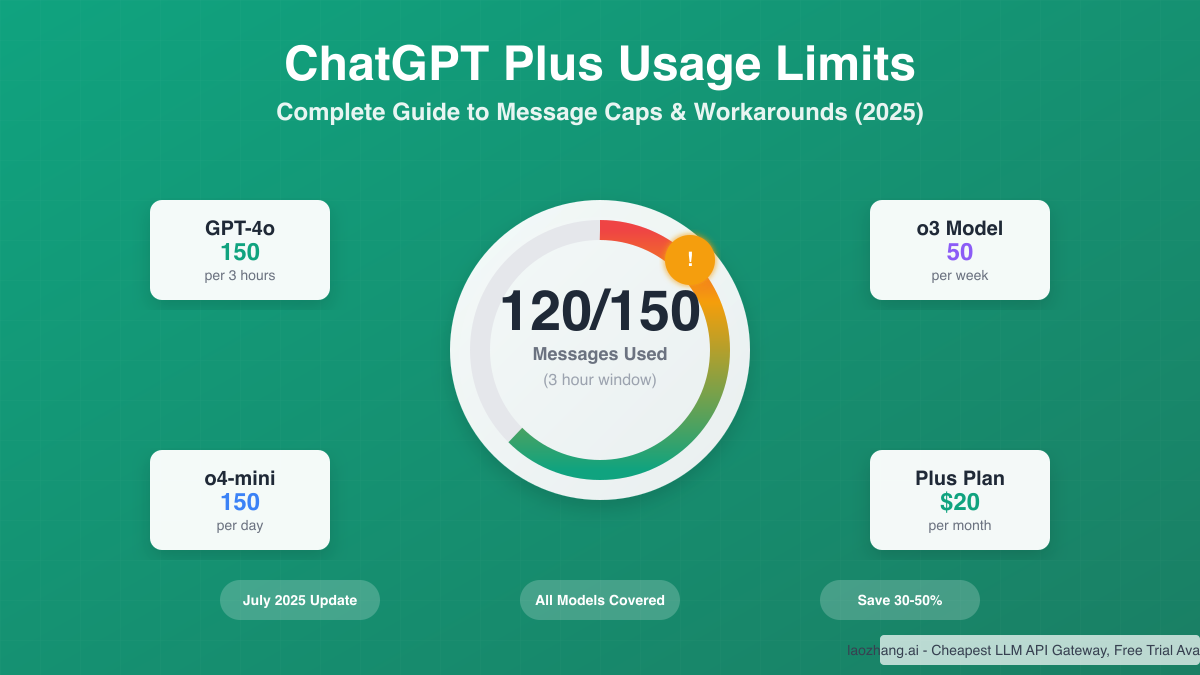
One of the quieter but more significant shifts in the AI landscape is the steady introduction of usage caps. When ChatGPT launched in late 2022, the free tier offered unlimited access. Today, free users face message caps, slower response speeds during peak hours, and limited access to the latest models.
OpenAI now enforces message limits on its free and Plus tiers. Anthropic's Claude restricts free usage to a small number of messages per day. Google's Gemini has rate limits. Even Microsoft Copilot, which is bundled into Microsoft 365 subscriptions, comes with usage quotas that vary by license tier.
For a Maine business that has built workflows around a free AI tool, these limits can be disruptive. A solo marketing manager at a Portland-based nonprofit who relies on ChatGPT for drafting donor communications may suddenly find the tool unavailable during a critical fundraising push. A construction firm using Claude to summarize project documents may hit message limits mid-afternoon.
"Free AI tools are a great starting point for exploration, but they are not a stable foundation for business operations. Any business relying on free-tier AI access should have a contingency plan." — AI Impact Maine advisory team
The lesson is straightforward: if an AI tool is critical to your workflow, budget for a paid plan or build your own fallback process. Free tools are subject to change at any time, and they often do.
2 — Free AI Tools Are Becoming Restricted
The restriction of free AI access is not accidental. It reflects the enormous cost of running large language models. Every AI query requires compute, and as user bases grow into the hundreds of millions, those costs become difficult to absorb through free access alone.
In response, AI companies are tightening free tiers and pushing users toward paid subscriptions. OpenAI's ChatGPT Plus costs $20 per month. Claude's Pro tier runs $20 per month. Google's Gemini Advanced is part of a $20 Google One plan. For a single user, these are reasonable expenses. But for a team of five, ten, or twenty — and especially for organizations using multiple AI tools — costs add up fast.
Source: Goldman Sachs Research has framed the AI boom around roughly $1 trillion in expected capital expenditures, including chips, data centers, and power infrastructure. Those economics help explain why unlimited free access is unlikely to remain the norm.
For a small business in Lewiston, Augusta, or Bangor, a $100–$300 per month software bill across AI tools may seem modest. But when combined with other SaaS subscriptions — CRMs, accounting software, project management tools, marketing platforms — the total starts to look very different. The question Maine businesses should ask is not "is this tool useful?" but "is it worth what it costs relative to the value it actually generates?"
3 — Token Pricing and API Costs Are Increasing
For businesses that integrate AI via APIs — building custom chatbots, automating document processing, or powering internal tools — the cost story is even more challenging. AI API pricing is typically measured in tokens, and while per-token prices have fallen in some cases, the volume of tokens needed for real business applications is often much higher than expected.
A single customer support chatbot integration might consume hundreds of thousands of tokens per day. A document analysis workflow might burn through millions of tokens in a week. Businesses that pilot these integrations on small datasets often underestimate how costs scale with real-world usage.
There have also been notable pricing shifts across the market. Providers regularly adjust model tiers, context-window pricing, and usage rules, while newer, more capable models often command premium pricing. The pattern is clear: early adopters enjoyed unusually generous access that is gradually becoming more structured and cost-conscious.
Real-World Example: Portland-Based Pilot
A Maine startup we worked with piloted an AI-powered customer triage system using GPT-4. During the pilot with 50 test users, API costs were roughly $40 per month. When they scaled to 500 users, projected costs jumped to over $800 per month — before factoring in the cost of additional infrastructure, prompt engineering time, and human review of AI outputs. The pilot was paused while they re-evaluated the business case.
This is not a reason to avoid AI integration. But it is a reason to model costs conservatively before building dependence on an API that may become more expensive over time.
4 — AI Hallucinations and Reliability Concerns
One of the most persistent challenges with large language models is hallucination — the tendency for AI to generate confident-sounding but factually incorrect information. This is not a bug that will be patched in the next update. It is a fundamental characteristic of how these models work.
Research from institutions including Oxford, Stanford, and other academic groups has consistently documented hallucinations and factuality problems that make AI outputs unreliable for high-stakes business use without human verification. A 2024 study published in Nature described hallucinations as a critical reliability problem for large language models and showed methods for detecting some of these confabulations.
Research reference: A 2024 Nature study on detecting hallucinations found that large language models can produce false or unsubstantiated answers, especially when users ask open-ended questions without a reliable source of truth.
For Maine businesses, this has practical implications. A construction firm using AI to interpret building codes could receive confidently wrong guidance. A healthcare practice using AI to draft patient communications could include inaccurate medical information. A municipal office using AI to summarize public meeting minutes could omit critical details.
The solution is not to avoid AI, but to build human review into every AI workflow. Any AI-generated content that informs decisions, communicates with clients, or affects compliance should be reviewed by a knowledgeable person before it is used. This adds back some of the time that AI was supposed to save — a reality that many organizations fail to account for in their AI ROI calculations.
5 — Businesses Are Struggling to Show ROI from AI Pilots
Despite widespread AI adoption, measurable returns remain elusive for many organizations. MIT Sloan's research on AI value has consistently found that while AI can drive productivity improvements in specific tasks, translating those improvements into bottom-line business value is harder than vendors suggest.
Common patterns we see in Maine organizations include:
- Time savings that don't convert to cost savings. An employee who saves two hours per week using AI may simply redirect that time to other tasks rather than reducing workload or headcount.
- Pilot projects that never scale. A team that successfully uses AI for one specific task struggles to replicate that success in other areas because of different data formats, workflows, or team capabilities.
- Unmeasured costs. The time spent on prompt engineering, result verification, tool evaluation, and staff training is rarely tracked against the value AI produces.
- Overestimated capability. Initial pilot results look promising because the team picks easy tasks. Harder tasks reveal the limits of the technology.
None of this means AI is worthless. It means businesses need to be disciplined about measuring what AI actually delivers, rather than assuming that time saved equals money saved.
6 — AI Infrastructure and Power Demand Concerns
Behind every AI query is a data center consuming electricity. Training and running large models require specialized chips, cooling systems, and power infrastructure. Running inference at scale produces ongoing energy demands that many grids were not designed to absorb quickly.
This has direct relevance to Maine. As data center proposals have emerged across the state — and as national conversations about AI energy consumption intensify — Maine businesses should be aware that AI's infrastructure demands may create local ripple effects. Higher energy demand can affect electricity pricing for commercial customers. Environmental considerations around AI energy consumption are likely to become part of regulatory conversations.
Context: Goldman Sachs analysis of the AI build-out highlights the physical scale of chips, data centers, cooling, and power infrastructure behind AI. The International Energy Agency has also flagged rising data center electricity demand as a growing concern for energy security, affordability, and sustainability.
For rural Maine businesses already facing higher energy costs and less reliable grid infrastructure, AI's growth trajectory matters. It may not be a reason to avoid AI today, but it is a factor that responsible long-term planning should account for.
7 — Why AI May Follow Parts of the Dot-Com Bubble Cycle
Comparisons between the current AI boom and the dot-com bubble of the late 1990s are common, and for good reason. We are seeing a similar pattern: massive investment, exuberant claims, companies adding "AI" to their names and seeing stock prices rise, and a flood of startups building products that depend on technology they do not fully control.
Here is what the dot-com cycle teaches us:
- The technology was real. The internet genuinely transformed business. The bubble was not about the internet being fake — it was about expectations vastly exceeding realities on a specific time horizon.
- Many companies failed. Pets.com and Webvan had real ideas executed at the wrong time and at the wrong scale. The underlying technology survived; the companies that over-leveraged on hype did not.
- The infrastructure winners emerged first. Companies like Cisco and Amazon Web Services that provided the plumbing of the internet generated enormous value before most consumer internet companies did.
- Survivors focused on practical business value. The companies that came out of the dot-com era strongest were those that solved real problems for real customers, not those with the flashiest pitches.
AI is following a similar arc. The technology is genuinely transformative in specific contexts. But many of the companies and use cases getting the most attention today will not exist in five years. Maine businesses should invest in AI capabilities that serve real needs, not chase every new tool or trend.
8 — Why Some Hype Is Real While Some Is Exaggerated
It would be a mistake to dismiss all AI enthusiasm as hype. In specific areas, AI delivers genuinely impressive results:
- Content drafting and ideation. AI is genuinely useful for generating first drafts, brainstorming ideas, summarizing long documents, and overcoming writer's block.
- Coding assistance. Tools like GitHub Copilot and Claude have meaningfully accelerated software development for skilled programmers.
- Data extraction and classification. AI can process large volumes of unstructured data far faster than humans, though the results still require validation.
- Language translation and accessibility. Real-time translation and transcription tools are improving rapidly and provide real value.
Where the hype is exaggerated:
- Full automation of complex workflows. The idea that AI will replace entire job functions for small businesses is not supported by current capabilities.
- Strategic decision-making. AI can summarize data but cannot make value judgments, understand context, or navigate the nuanced relationships that define local business environments in Maine.
- Zero-cost transformation. Effective AI adoption requires training, oversight, integration work, and ongoing maintenance. These costs are rarely highlighted.
"AI is a tool, not a strategy. The businesses that benefit most are not the ones that adopt AI fastest, but the ones that adopt it most deliberately." — AI Impact Maine
9 — Why Maine Businesses Should Focus on Practical AI Adoption Instead of Trends
Maine's business landscape is distinctive. We have a high concentration of small and family-owned businesses. We have significant rural areas where internet connectivity remains inconsistent. We have industries — fishing, forestry, tourism, manufacturing, healthcare, education — where AI's applicability varies enormously.
What works for a venture-backed startup in San Francisco or a Fortune 500 company in New York is unlikely to map cleanly onto a 30-person manufacturing company in Biddeford or a 12-person nonprofit in Presque Isle. Maine businesses need a different approach to AI:
- Start with the problem, not the tool. Identify a specific pain point before evaluating AI solutions. A Portland marketing agency might benefit from AI drafting tools. A rural healthcare practice might be better off investing in reliable internet connectivity before adding AI.
- Invest in training before tools. Staff who understand what AI can and cannot do will make better decisions about when to use it. Our AI training programs are built around this principle.
- Audit before adopting. A realistic AI process audit can reveal which workflows actually benefit from AI and which do not.
- Ignore FOMO. The fear of being left behind is powerful but rarely productive. The businesses that take a measured approach in 2026 will be better positioned in 2027 and 2028 than those that rushed into expensive, underperforming AI contracts.
Practical Steps for Maine Organizations
Before committing to any AI tool or subscription, ask these four questions: (1) What specific problem are we solving? (2) Can we measure whether AI solves it? (3) What is the total cost, including training, oversight, and verification time? (4) What happens if the tool changes its pricing or availability next year? If you cannot answer all four, you are not ready to buy.
10 — Human Oversight and Local Workforce Planning
The most overlooked aspect of AI adoption is the human side. AI does not eliminate the need for skilled workers — it changes what those workers need to know. A Maine business that implements AI without investing in its workforce is building on an unstable foundation.
Human oversight matters because:
- AI makes mistakes. Someone needs to catch them. This requires domain expertise, not just technical skill.
- AI cannot read a room. For Maine businesses serving Maine communities — where relationships and trust matter deeply — AI-generated communications need human judgment before they reach clients.
- AI cannot take responsibility. When something goes wrong, the business is accountable, not the AI provider.
- Workforce planning changes. Roles will evolve. Maine organizations should think about how AI changes job design, training needs, and hiring criteria — not as a one-time adjustment, but as an ongoing process.
Maine's workforce development organizations and community colleges are already beginning to address AI literacy. Businesses that engage with these efforts — rather than trying to solve AI workforce challenges in isolation — will be better positioned to adapt.
Local context: Maine's Department of Labor and local workforce development partners can help employers think through training needs as roles change. Businesses that partner with these organizations can reduce the cost and risk of AI adoption.
FAQ — AI Hype and Reality for Maine Businesses
Is AI a bubble that will burst?
AI is not a bubble in the sense that the technology is fake or worthless. But the investment environment and expectation levels may be inflated. A correction is likely — many AI startups will fail, and many enterprise AI investments will not deliver projected returns. The core technology will survive and continue to improve, but on a slower, more realistic trajectory than current hype suggests.
Should my Maine business stop investing in AI?
No. But you should invest deliberately. Focus on specific problems, measure outcomes, and avoid locking into long-term contracts for tools you have not thoroughly tested with your own data and workflows.
How much should I budget for AI tools?
For a small Maine business (5–20 employees), a reasonable AI budget might be $50–$200 per user per year for tools that have demonstrated clear value, plus training and oversight time. Avoid spending more than 2–3% of operating budget on AI tools unless you have clear ROI evidence.
Are free AI tools reliable enough for business use?
Free AI tools are useful for experimentation and low-risk tasks, but they should not be treated as production systems. Usage limits change, privacy protections may be weaker, and availability is not guaranteed. Any business-critical use of AI should be on a paid plan with clear terms of service.
What industries in Maine benefit most from AI right now?
Based on our work with Maine organizations, the highest-value AI applications today are in content drafting, data extraction from documents, coding assistance, meeting transcription and summarization, and basic customer service triage. Heavily regulated industries like healthcare, legal, and financial services need additional caution and verification layers.
How do I know if an AI vendor is overpromising?
Ask them for a pilot with your actual data. If they cannot or will not demonstrate their tool working on your specific use case before asking for a commitment, treat their claims skeptically. Also ask about hallucination rates, privacy guarantees, and what happens if their pricing changes.
What Maine Businesses Should Do Next
The goal of this article is not to discourage AI adoption, but to encourage informed adoption. Here is a practical action plan:
- Complete a free AI assessment. Our AI Impact Assessment takes under three minutes and gives you a clear picture of where your organization stands.
- Run a process audit. Identify the 2–3 workflows where AI could have the most impact, and pilot AI tools on those specific tasks before expanding.
- Train your team. Make sure everyone understands what AI can and cannot do, how to spot AI errors, and what data should never be entered into an AI tool. Our AI training workshops are designed for Maine teams.
- Build a simple AI policy. Even a one-page policy covering approved tools, data restrictions, and review requirements provides important protection.
- Review costs quarterly. AI pricing changes frequently. Set a recurring calendar reminder to evaluate whether every AI subscription is still delivering value.
- Stay connected. Follow AI Workforce Trends for ongoing, practical guidance tailored to Maine's business environment.
The AI landscape will continue to evolve rapidly. The businesses that navigate it best will not be those that move fastest, but those that move most thoughtfully. For Maine organizations, that means starting with a clear understanding of what AI can actually do — and what it cannot.
Sources & References
-
MIT Sloan — Scaling AI for Results
Guidance on achieving AI value through measured, practical efforts rather than broad transformation promises. -
Goldman Sachs — Will the $1 Trillion of Generative AI Investment Pay Off?
Analysis of AI infrastructure investment and the question of whether AI use cases will justify the cost. -
Nature — Detecting Hallucinations in Large Language Models Using Semantic Entropy
Peer-reviewed research on detecting false and unsubstantiated answers from large language models. -
Goldman Sachs — Tracking Trillions: The AI Build-Out
A 2026 analysis of the assumptions shaping large-scale AI infrastructure investment. -
International Energy Agency — Key Questions on Energy and AI
Analysis of rising data center electricity demand and implications for energy security, affordability, and sustainability. -
Maine Department of Labor — Workforce Development
Maine state resources for workforce training, including emerging AI literacy initiatives.